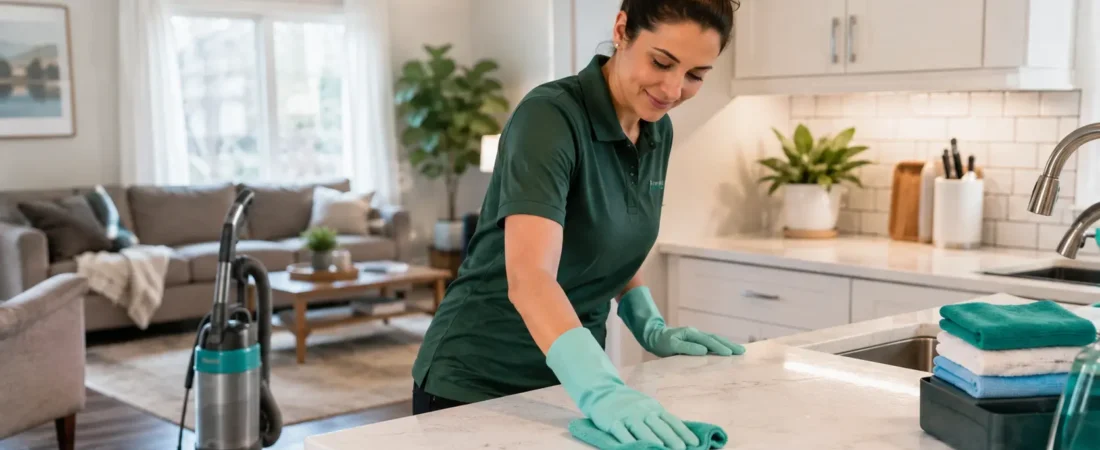
How often should you schedule house cleaning? For many homes, the practical choices are weekly, biweekly or every four weeks. Weekly cleaning generally suits busy, high-traffic households that want very little upkeep between visits. Biweekly cleaning offers regular support with more time between appointments. Every-four-week cleaning can work for smaller or lower-traffic homes whose occupants handle routine upkeep themselves.
There is no universal schedule that is right for every London, Ontario household. The best frequency depends on the number of people and pets in the home, how quickly kitchens and bathrooms show use, how much cleaning you complete between visits and the level of consistency you want.
House Cleaning Frequency at a Glance
| Schedule | Often suits | Upkeep between visits | Main consideration |
|---|---|---|---|
| Weekly | Active households, children, pets, frequent guests or heavy use | Usually lighter | More appointments throughout the year |
| Biweekly | Moderately busy homes that need reliable routine help | Light to moderate | Some buildup may return before the next visit |
| Every four weeks | Smaller or lower-traffic homes maintained between visits | Moderate to higher | More time for dust and residue to accumulate |
| One-time | Events, seasonal resets or occasional support | Household handles ongoing maintenance | Does not create a regular maintenance rhythm |
The schedule describes how often cleaning takes place; it does not automatically define every task included. Most recurring appointments focus on an agreed routine-cleaning checklist. Detailed extras should be discussed when requesting a quote.
If you want ongoing help, explore recurring cleaning services in London or request a free cleaning quote based on your home and preferred frequency.
What Determines How Often Your Home Should Be Cleaned?
The right schedule is based on how the home is actually used—not only its square footage.
Number of Occupants
More occupants usually mean more dishes, bathroom use, floor traffic and frequently touched surfaces. A household with several people may need attention sooner than a similar-sized home occupied by one person.
Children and Pets
Children can add crumbs, fingerprints and activity throughout common areas. Pets may bring in outdoor debris or shed on floors and furniture. These households may prefer weekly or biweekly cleaning, depending on the amount of upkeep completed between visits.
Kitchens and Bathrooms
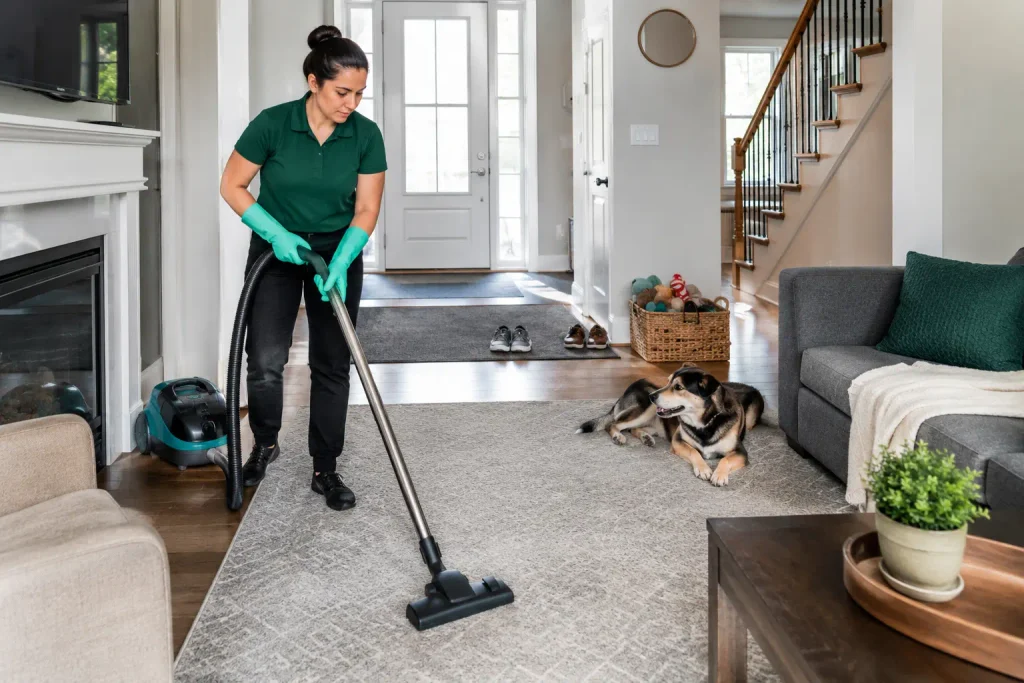
Frequently used kitchens and bathrooms often show residue before other rooms. Consider how quickly sinks, counters, fixtures, stovetops and floors need attention after they have been cleaned.
Working From Home and Daily Activity
A home occupied throughout the day generally receives more use than a property left empty during working hours. Home offices, kitchens, washrooms and shared living areas may therefore need more regular attention.
Your Own Cleaning Routine
Some households want professional cleaning to handle most routine upkeep. Others are comfortable cleaning spills, counters, floors and bathrooms between appointments. The less upkeep you want to complete yourself, the more useful a frequent schedule may be.
Seasonal Floor and Entryway Mess
London weather can change what enters the home. Rain, spring debris, winter slush and road salt can make entrances and floors need attention sooner. You may find that one schedule works for most of the year but needs to be reviewed during a busier season.
Preferred Budget and Level of Consistency
More frequent cleaning means more appointments, while wider intervals require more household upkeep. Pricing also depends on the property, its condition and the confirmed checklist. Compare the overall schedule—not only the price of one visit—and request a quote based on your actual home.
When Weekly House Cleaning Makes Sense
Weekly cleaning provides the shortest interval between appointments. It may be appropriate when:
- Several people use the home every day
- You have children or pets
- Kitchens and bathrooms need attention within a few days
- You regularly host relatives, friends or clients at home
- You have limited time or ability to complete routine cleaning
- You want the home maintained close to a consistent baseline
The main advantage is that ordinary dust, crumbs and household residue have less time to accumulate. Each appointment can focus on maintaining agreed areas rather than repeatedly catching up after a long gap.
Weekly service does not remove the need for every daily task. Dishes, spills, food waste, clutter and urgent messes still need attention between visits. It can, however, reduce the amount of larger routine cleaning left on your weekly to-do list.
When Biweekly House Cleaning Makes Sense
Biweekly cleaning means an appointment approximately every two weeks. It can be a practical fit when:
- Your home has moderate daily activity
- You want regular help without a weekly appointment
- You can complete light tidying and spot cleaning between visits
- Kitchens and bathrooms remain manageable for about two weeks
- You want a balance between frequency and total household spending
During the first few appointments, notice what the home looks like near the end of the second week. If floors, bathrooms and the kitchen are still reasonably manageable, the schedule may be suitable. If the home feels overdue well before the next visit, weekly cleaning may fit better.
Biweekly service works best when clutter and immediate messes are handled between appointments. Clear surfaces also help the confirmed cleaning time focus on wiping, dusting, vacuuming and mopping rather than moving personal belongings.
When Every-Four-Week Cleaning Makes Sense
Every-four-week cleaning leaves the longest interval among the recurring options offered by London Fresh Cleaning Co. It may suit a household when:
- One or two people occupy the home
- The property receives relatively light use
- There are no pets or heavy floor-traffic concerns
- You routinely clean kitchens, bathrooms and spills yourself
- You mainly want scheduled assistance with general upkeep
- The home does not develop significant buildup between visits
This schedule requires more maintenance from the household. By the third or fourth week, dust, bathroom residue and floor debris may be more noticeable in an active home. If each appointment starts to feel like recovery from buildup rather than routine maintenance, a shorter interval may be more appropriate.
Is Every Four Weeks the Same as Monthly?
Not exactly. Every four weeks creates a 28-day interval, while a monthly appointment is normally tied to one visit per calendar month. Because calendar months are longer than four weeks, the number and timing of appointments can differ over a full year. Confirm the exact scheduling method when arranging recurring service.
Do You Need a Deep Clean Before Recurring Cleaning?
Not every home needs deep cleaning first. A reasonably maintained home may be ready for standard house cleaning on a recurring schedule.
An initial deep cleaning service may be recommended when there is noticeable grease, soap residue, dust or buildup in several areas. Addressing the existing condition first can create a more manageable starting point for routine maintenance.
The service name alone should not decide the answer. Describe the current condition honestly, identify the rooms that concern you and ask what the proposed checklist includes. For a fuller comparison, read Standard Cleaning vs Deep Cleaning in London, Ontario.
Signs Your Cleaning Appointments May Be Too Far Apart
Consider a shorter interval when:
- The kitchen or bathrooms feel overdue well before the next visit
- Pet hair or floor debris becomes difficult to manage
- Each appointment requires repeated catch-up work
- You regularly add more priority areas than the appointment can reasonably cover
- The home no longer feels consistently maintained between visits
These signs do not automatically mean weekly cleaning is required. Moving from every four weeks to biweekly may be enough. The goal is to choose the least frequent schedule that still meets your expectations and works with the upkeep you are willing to complete.
Signs You May Be Able to Use a Longer Interval
A longer interval may be worth discussing when:
- The home still feels well maintained when the next appointment arrives
- Few people use the space and there are no major pet or traffic concerns
- You routinely handle bathrooms, floors, counters and spills yourself
- Some scheduled areas rarely require attention
- Your household needs change for an extended period
Before changing the schedule, consider whether the result comes from professional visits, your own work between them or both. A longer interval may shift more of the routine back to the household.
What Should You Do Between Cleaning Appointments?
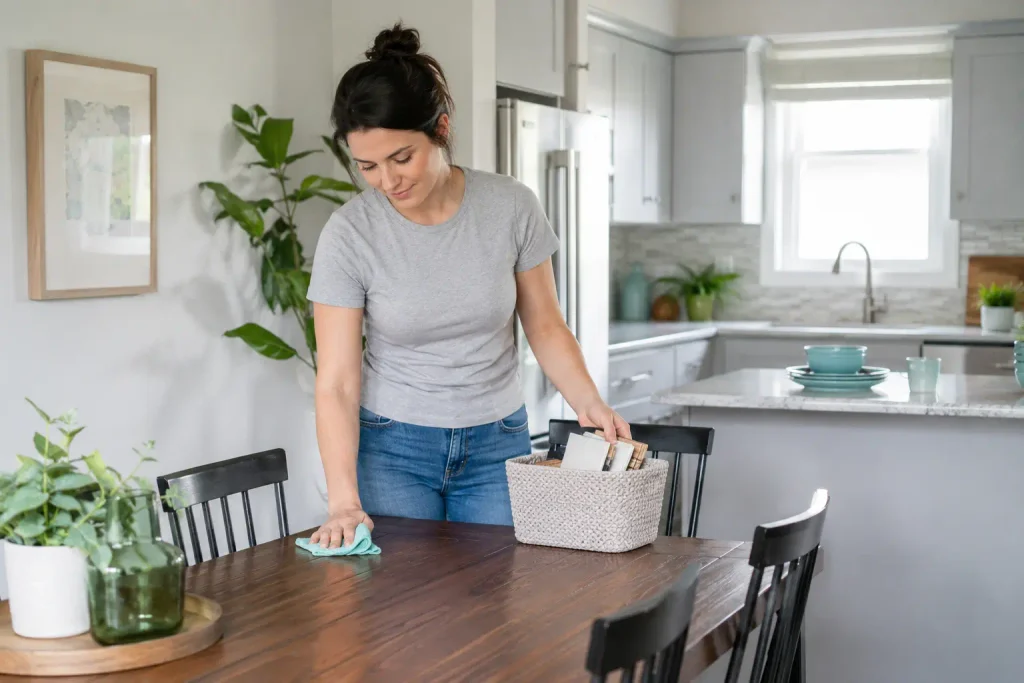
Recurring cleaning is easier to maintain when small, time-sensitive tasks are handled as they arise. Depending on your household, this may include:
- Washing dishes and clearing food residue
- Wiping spills promptly
- Removing garbage and recycling
- Putting away clothing, toys and personal items
- Sweeping or spot-vacuuming busy areas
- Lightly wiping counters or bathroom surfaces when needed
- Keeping entrances manageable during wet or snowy weather
Always follow the manufacturer’s label when using household products. Health Canada advises people not to mix household chemical products and to follow ventilation and protective-equipment instructions on the label. See its guidance on using household chemicals safely.
How to Choose Your Starting Schedule
Use these three questions:
- How soon does the home feel overdue after a thorough clean? If it happens within several days, consider weekly service. If it happens near the end of two weeks, biweekly may be a better starting point.
- How much routine cleaning will you complete yourself? Every-four-week service normally requires more maintenance between appointments.
- What condition is the home in today? Existing buildup may need a deeper first appointment before a recurring routine begins.
You do not have to make the decision from the schedule name alone. London Fresh Cleaning Co. can review your household, current condition, priorities and preferred frequency before recommending an available option.
How to Request a More Accurate Recurring Cleaning Quote
Provide the following details:
- Property type and approximate size
- Number of bedrooms and bathrooms
- Number of occupants and presence of pets
- Current condition of the home
- Areas that need the most attention
- Preferred weekly, biweekly or every-four-week frequency
- Any requested extras, such as inside appliances or cabinets
- Parking, access, allergy, product or sensitive-surface information
The exact checklist and price should be confirmed before service begins. Additional tasks are not automatically included simply because the appointment is recurring.
Explore residential cleaning services in London or request your free cleaning quote with the details of your home.
Frequently Asked Questions
How often should a professional cleaner come to my home?
The appropriate frequency depends on household activity, occupants, pets, property condition, desired level of consistency and the amount of upkeep completed between visits. Weekly, biweekly and every-four-week schedules can each be appropriate for different homes.
Is weekly house cleaning too often?
Not for a busy or high-traffic household. Weekly cleaning may suit homes with children, pets, frequent cooking, regular guests or limited time for routine upkeep. A quieter home may not need that frequency.
Is biweekly cleaning enough for most homes?
Biweekly cleaning can be a practical starting point for a moderately active home whose occupants complete light upkeep between visits. The condition of the home near the end of the second week will help show whether the interval is working.
What is the difference between biweekly and every-four-week cleaning?
Biweekly cleaning takes place about every two weeks, while every-four-week cleaning leaves roughly twice as much time between appointments. The longer interval generally requires more household maintenance and allows more time for dust and residue to return.
Do I need deep cleaning before I start recurring service?
Not always. A home that is already reasonably maintained may begin with standard cleaning. Deep cleaning may be recommended when several areas have significant buildup or have not received detailed attention recently.
Can I change my cleaning frequency later?
You can ask to review the frequency when your household needs change. Any adjustment will depend on the requested cleaning scope and appointment availability.
Choose a Cleaning Schedule Based on Your Home
Weekly cleaning suits households that want frequent support and minimal buildup between visits. Biweekly cleaning provides regular maintenance with a longer gap between appointments. Every-four-week cleaning can work for lower-traffic homes whose occupants are comfortable handling more upkeep themselves.
The best schedule is the one that matches your home’s real condition, activity and expectations. London Fresh Cleaning Co. provides weekly, biweekly and every-four-week recurring options in London, Ontario, subject to availability and the scope confirmed for your property.
Request a free cleaning quote and tell us about your home, priorities and preferred frequency.