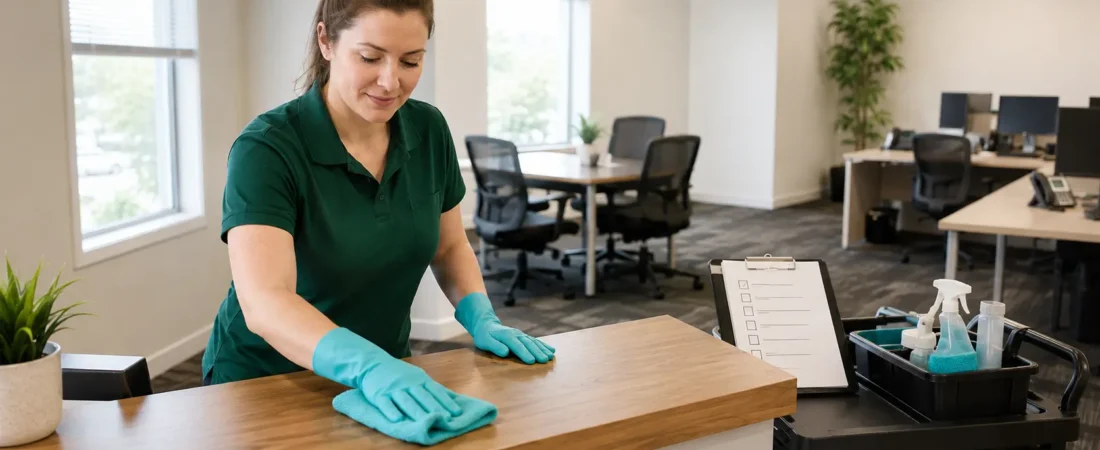
An office cleaning checklist should cover reception, cleared workstations, meeting rooms, washrooms, the staff kitchen, waste bins, floors and frequently touched surfaces. For a small business in London, Ontario, it should also explain when each task happens, who handles it and which areas need extra attention.
Start with daily checks for spills, washroom supplies and food waste. Add routine surface and floor cleaning around the way your office is used, then schedule detailed work on edges, glass and other slower-building areas.
The goal is a plan people can follow. A tidy reception area does not tell you whether the kitchenette sink, meeting table or staff washroom has received attention.
Use the checklist below to organize your workplace and discuss your priorities with a cleaning provider. London Fresh Cleaning Co. offers commercial cleaning services in London with the tasks and schedule confirmed for each property.
Your Office Cleaning Checklist at a Glance
The following is a suggested starting point for an office used on weekdays. Adjust it for occupancy, customer visits, shared facilities and your workplace’s procedures. Daily checks may be handled by staff between professional cleaning appointments.
| When | Main priorities | What to confirm |
|---|---|---|
| Each occupied day | Spills, washrooms, food waste, kitchen surfaces and frequently touched areas | Who checks during the day and who handles closing tasks |
| Each scheduled cleaning visit | Agreed desks, reception, meeting rooms, washrooms, kitchenette, bins and floors | The exact rooms, surfaces and tasks included |
| Weekly or as buildup requires | Accessible ledges, furniture detail, floor edges and interior glass | Which tasks need more frequent attention in your office |
| Monthly or periodically | Review neglected areas and arrange deeper detail or optional extras | Who authorizes the work and whether separate pricing applies |
A weekly cleaning appointment does not replace attention to a spill or an empty soap dispenser on another day. Make those responsibilities clear before the schedule begins.
Room-by-Room Office Cleaning Checklist
Use these boxes as a planning list. Assign each task to your staff, landlord or cleaning provider, and mark anything that does not apply. Tasks become part of a booked service only when they are included in the confirmed scope.
Reception, Entrance and Waiting Area
- Check the entrance for tracked-in dirt, moisture and loose debris.
- Clean entrance mats using a method suitable for the material.
- Wipe the cleared reception counter and accessible side tables.
- Attend to agreed door handles, push plates and other frequently touched surfaces.
- Dust accessible furniture and ledges.
- Clean marks on accessible interior glass when included.
- Vacuum or mop the appropriate floor surfaces.
For London businesses, changing weather can mean a different workload at the entrance. Add checks during wet or snowy conditions, and discuss how salt residue will be handled on your flooring. Mats should sit securely without obstructing the route into the office.
The Canadian Centre for Occupational Health and Safety (CCOHS) highlights spill removal and clear passageways as parts of workplace housekeeping. CCOHS housekeeping guidance.
Desks, Workstations and Meeting Rooms
- Clear approved desk surfaces of personal items before cleaning.
- Wipe cleared desks, meeting tables and accessible work surfaces.
- Dust reachable shelves and furniture without disturbing stored documents.
- Wipe suitable chair arms and other agreed contact points.
- Empty designated ordinary wastebaskets and replace available liners.
- Vacuum accessible carpet or clean suitable hard flooring around workstations.
Agree on a clear-desk rule: employees put away documents and belongings, and the cleaner works on the exposed surfaces. Identify restricted desks, storage areas and equipment before the first visit.
Keyboards, screens, phones and shared printer controls need a separate agreement about products and methods. Follow the equipment manufacturer’s instructions, and avoid spraying liquid directly onto electronics. Cleaning a desk should not require a cleaner to open files, unplug equipment or reorganize someone’s work.
Staff Kitchen or Break Room
- Remove dishes and personal food containers from the surfaces being cleaned.
- Wipe accessible counters and tables.
- Clean the sink, faucet and surrounding splash area.
- Wipe agreed appliance exteriors and handles.
- Check food-waste bins and clean visible residue around the waste station.
- Vacuum or mop suitable flooring, including accessible areas around tables.
Decide who handles dishes, old food and refrigerator contents. These tasks often fall between office housekeeping and an employee’s personal responsibility. A clear arrangement prevents them from being overlooked.
Appliance interiors should have their own schedule. For example, assign the office contact to notify staff before a planned refrigerator cleanout, then confirm who empties it and who cleans it. Request interior appliance cleaning separately when obtaining a service quote.
Washrooms
- Check soap, toilet paper and other agreed consumables during occupied days.
- Clean sinks, counters, faucets and mirrors.
- Clean toilets and accessible surrounding surfaces.
- Address agreed handles, flush controls and dispenser contact points.
- Empty designated waste bins and replace available liners.
- Clean the floor with a method appropriate for the surface.
- Report leaks, damaged fixtures or empty supply stock to the office contact.
A washroom used by staff and customers may need checks more often than the rest of the office. Base the arrangement on actual use and condition.
Keep washroom cloths and equipment separate from those used for desks and food areas. Where disinfection is part of the workplace plan, follow the product instructions and the process described below.
Hallways, Floors and Shared Areas
- Keep walking routes accessible before work begins.
- Vacuum carpets, rugs and agreed floor edges.
- Mop appropriate hard floors using suitable products and moisture levels.
- Attend to accessible corners and agreed areas beneath furniture.
- Check shared seating and tables for visible marks or debris.
- Leave cleaned areas ready for safe use and report any unresolved floor issue.
Confirm how furniture will be handled. Cleaning beneath an easily moved chair is different from moving a loaded filing cabinet or heavy desk.
Plan floor cleaning around foot traffic so people do not walk through the work area while surfaces are wet. Report loose flooring or damaged mats; routine cleaning cannot repair them.
Weekly and Periodic Office Cleaning Tasks
Some detail work needs a separate place in the schedule so it does not disappear behind urgent daily tasks.
Review These Areas Weekly
- Accessible ledges and the tops of low furniture.
- Chair bases, table legs and reachable furniture edges.
- Baseboards and floor corners where dust is collecting.
- Agreed interior glass, doors and partitions.
- Waste-station surfaces and visible buildup around bins.
These are review points, not a reason to leave visible dirt until the end of the week. Move a task into the routine checklist if your office needs it more often.
Plan These Details Periodically
- More detailed attention to accessible trim and baseboards.
- A staff-kitchen appliance interior clean, after emptying and approval.
- Interior glass or blinds beyond the routine agreed scope.
- Cleaning around furniture after access has been arranged.
- A review of storage areas, clutter and spaces omitted from normal visits.
Carpet extraction, high-access work, exterior windows and specialized sanitation need separate discussion. Describe the request and confirm whether the provider offers it before adding it to the plan.
Cleaning and Disinfecting: Make the Task Clear
Cleaning removes dirt and residue. Disinfecting uses an appropriate product to act on microorganisms according to its label. A quick wipe with an unspecified cleaner should not be recorded as a completed disinfection task.
Where disinfection is required, clean visibly dirty surfaces first and follow the disinfectant’s directions, including dilution, contact time and any rinsing requirements. Contact time means leaving the surface treated for the period specified on the label; wiping it dry immediately may interrupt that process. CCOHS guidance on cleaning and disinfecting.
For anyone carrying out the work, provide suitable instructions, ventilation and protective equipment for the products used. Keep products identified, follow their labels and safety data sheets, and never mix different cleaning products. CCOHS cleaning-product guidance.
Name the surfaces in the checklist instead of writing “disinfect everything.” Door handles, shared controls and kitchen or washroom fixtures may have different materials and cleaning requirements. General office cleaning also needs to be distinguished from any specialized sanitation procedures your workplace requires.
How Often Should a Small Office Be Cleaned?
Use the office’s workload to choose a schedule. Consider how many people attend, whether customers visit, how washrooms are shared and how much daily upkeep staff complete.
| Office situation | Planning approach |
|---|---|
| Small office with low occupancy and limited visitors | Check essential areas on occupied days; assess an appropriate routine service interval |
| Office with regular staff attendance and shared kitchen use | Give washrooms, food areas, bins and contact points more frequent attention |
| Reception area with frequent customer visits | Check entrances and waiting areas throughout use, with cleaning adjusted to condition |
| Busy period, event or change in occupancy | Review the checklist and arrange extra attention where needed |
For example, an office manager might handle daytime supply checks and spills while a cleaner completes the agreed room checklist during scheduled visits. The important part is knowing who covers the time between appointments.
When requesting professional help, describe the daily needs separately from the appointment frequency you want to book. London Fresh confirms commercial appointment availability with the quote; a daily task in this guide is not a promise of daily service.
Who Is Responsible for Each Cleaning Task?
Assign one office contact to coordinate the plan. That person can answer questions, arrange access, report changing priorities and approve additional work.
Before the first appointment, agree on:
- Staff preparation: clearing desks, putting away documents, handling dishes and removing personal food.
- Cleaning responsibilities: the rooms, surfaces, bins and floors included in the visit.
- Supplies: who provides products, equipment, bin liners, soap and paper goods, and who monitors stock.
- Access: permitted rooms, entry arrangements, parking and the agreed lock-up process.
- Landlord responsibilities: shared building corridors, external areas and other spaces outside your tenancy’s cleaning arrangement.
Keep sensitive access information with the people who need it. The general checklist can identify an authorized contact without displaying alarm codes or confidential details.
If the arrangement is unclear, contact London Fresh Cleaning Co. before adding the task to a visit.
A Simple Cleaning Completion Record
A short record makes the checklist easier to manage. Use columns for area or task, due date, completed by and exceptions.
Record what prevented a task from being completed, such as a desk covered in paperwork, missing consumables or a locked room. A tick should mean the agreed work was completed, not simply that someone attended the office.
Review the record with your office contact periodically. Repeated exceptions may point to a preparation issue, a missing supply or a task that needs a different frequency. Update the plan when staffing, layout or customer traffic changes.
What to Include in an Office Cleaning Quote Request
Prepare these details so the quote reflects your workplace:
- Business type and address or postal code.
- Approximate square footage and number of washrooms.
- Areas requiring cleaning and main flooring types.
- Typical occupancy, visitors and operating hours.
- Current condition and any areas with buildup.
- Preferred appointment frequency and service times.
- Product restrictions, sensitive surfaces and requested extras.
- Access arrangements and the best workplace contact.
London Fresh may request photographs or suggest a walkthrough when more detail is needed. Availability for evening, weekend or other appointment times is confirmed during planning.
If your workplace is outside London, check the service-area information and provide the location so availability can be confirmed.
Frequently Asked Questions About Office Cleaning
What should an office cleaning checklist include?
Include reception, cleared desks, meeting rooms, washrooms, staff kitchens, bins, floors and agreed frequently touched surfaces. Add frequency, responsibility and any exclusions so the list can guide the work.
Is weekly office cleaning enough?
It depends on occupancy and the work completed between appointments. Washroom supplies, spills and food waste need attention when the office is in use, even if professional cleaning is booked weekly.
Are dishes and refrigerator interiors included?
Confirm them separately. Staff dishes, food disposal and appliance interiors are different from routine cleaning of accessible kitchenette counters, sinks and appliance exteriors.
Can cleaners work outside business hours?
Request your preferred times when discussing the job. London Fresh confirms scheduling options according to availability and the property’s requirements, including access and lock-up arrangements.
How much does office cleaning cost in London, Ontario?
Pricing depends on the workplace’s size, condition, layout, washrooms, frequency and requested tasks. Request a quote based on the office checklist rather than applying a house-cleaning price to a commercial space.
Does this checklist cover specialized medical or industrial cleaning?
This guide covers routine office housekeeping. Workplaces with specialized sanitation or hazardous-material requirements need an appropriate separate plan and a provider able to meet those requirements.
Build a Cleaning Plan for Your London Workplace
A useful office cleaning checklist makes the work specific: what gets cleaned, when it happens and who handles the details between visits.
London Fresh Cleaning Co. can review your workplace, preferred schedule and priority areas to confirm an appropriate commercial cleaning scope.
Request a free cleaning quote and tell us about your business, washrooms, flooring and the areas you would like included.