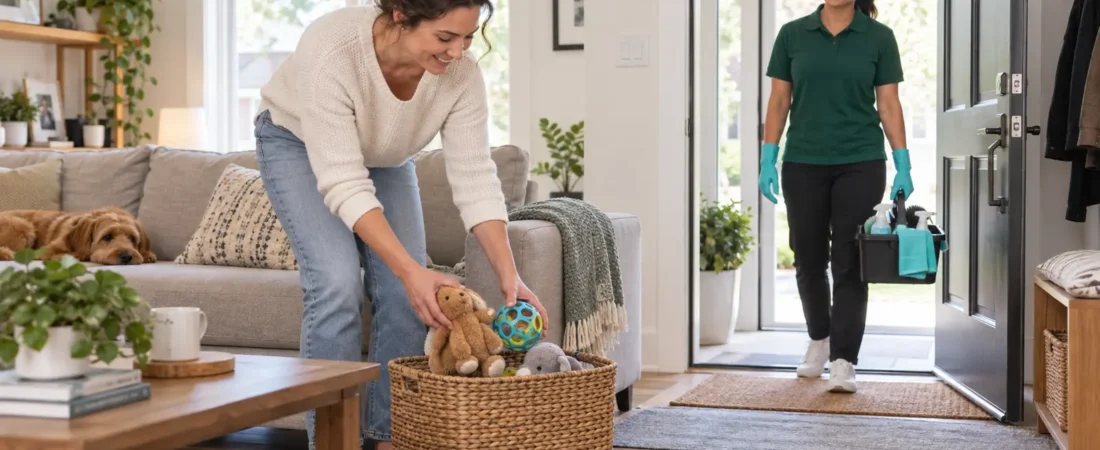
To prepare for house cleaning, focus on access rather than doing the cleaner’s work. Pick up loose items, clear the surfaces and floors included in your appointment, secure valuables, make a plan for pets, and share any priorities or special instructions before the cleaner arrives.
You do not need to vacuum, mop, dust or scrub the bathroom first. The goal is simply to make the booked areas accessible so the cleaner can spend more of the appointment on the cleaning tasks you requested.
For homeowners and renters in London, Ontario, a little preparation also helps prevent delays involving parking, condo entry, alarms or locked rooms. Use this guide before a one-time visit or as a simple routine for recurring appointments.
London Fresh Cleaning Co. provides standard house cleaning in London for houses, condos and apartments, with the cleaning scope confirmed for each home.
How to Prepare for House Cleaning: Quick Checklist
Use this checklist on the day before or the morning of your appointment:
- Review the cleaning service and tasks confirmed in your quote.
- Send any updated priorities before the appointment.
- Pick up toys, clothing, shoes and loose items from the floors being cleaned.
- Clear requested countertops, sinks, tables and bathroom vanities.
- Put away valuables, fragile items and private documents.
- Confirm which rooms are included, off-limits or locked.
- Arrange a comfortable, secure space for pets.
- Share allergies, product restrictions and delicate-surface information.
- Confirm entry, parking, elevator, alarm and key instructions.
- Keep water, electricity and suitable lighting available.
- Leave fresh linens out if a confirmed task requires them.
- Make sure the cleaner can contact you if a question arises.
This should be light preparation, not another full cleaning session. If a surface is covered with everyday items, move those items to where they belong instead of cleaning beneath them yourself.
Do You Need to Clean Before the Cleaner Comes?
No. You are hiring a cleaner to clean. There is no need to hide normal dust, crumbs, soap residue or the reason you booked the appointment.
Preparation and cleaning have different purposes:
| Preparation before the visit | Work for the cleaning appointment |
|---|---|
| Put away belongings and identify priorities | Dust and wipe the accessible surfaces in scope |
| Clear floors, counters and sinks | Vacuum and mop the appropriate flooring |
| Secure valuables, fragile items and pets | Clean the confirmed kitchen and bathroom areas |
| Explain access and household instructions | Complete the agreed checklist |
Pre-cleaning can use up your time without improving the appointment. Clearing access is more useful because it lets the cleaner reach the surfaces that matter.
If your home has substantial buildup, say so when booking rather than trying to make it look routinely maintained. The condition helps determine whether standard or more detailed work is appropriate. Our standard cleaning versus deep cleaning guide explains that distinction.
1. Confirm the Cleaning Scope
Start with the quote or appointment confirmation. Know which rooms and tasks are included, and tell the company promptly if something has changed.
A standard visit may address accessible kitchen counters, sinks, appliance exteriors, bathrooms, dusting and floors. More time-intensive work—such as oven or refrigerator interiors, inside cupboards, detailed blinds or interior windows—may need to be requested separately. A home with heavier buildup may also require a different service level.
Ask before the appointment if you are unsure about:
- The rooms included in the visit
- Appliance or cupboard interiors
- Bed linen changes
- Interior windows, blinds or detailed baseboards
- Carpet stain treatment or extraction
- Wall washing or other specialty requests
- Areas blocked by furniture or belongings
London Fresh Cleaning Co. confirms additional requests, availability and any effect on time or pricing before they become part of the appointment. Do not assume that leaving a note on the day automatically adds work to the booked scope.
2. Pick Up Clutter From the Areas Being Cleaned
Focus on small objects that prevent access. Put toys in a basket, clothing in a hamper, shoes on a rack and paperwork in a safe place. Move charging cables away from the floor, and give small household items a temporary home if you do not have time to organize them fully.
Pay particular attention to:
- Floors and stairways
- Kitchen counters and the sink
- Bathroom vanities, tub edges and shower floors
- Dining and coffee tables
- Nightstands and dressers included in the scope
- Sofa surfaces if cleaning around them is requested
You do not need to create an empty, showroom-style home. A cleaner can work in a normally occupied space. The practical question is whether the agreed surface can be reached and cleaned without guessing where personal belongings should go.
Avoid making one large pile in a room that also needs cleaning. A labelled basket, bedroom bin or designated off-limits area can keep temporary items together without blocking the floor.
3. Prepare the Kitchen and Bathrooms
Kitchens and bathrooms contain many small objects, so a few minutes of tidying can open up useful working space.
In the kitchen, clear dishes from the sink and requested counters where reasonably possible. Put away food, mail, medication and small appliances that do not need to remain out. If an oven or refrigerator interior was confirmed, empty the relevant appliance and follow any preparation instructions from the cleaner or manufacturer.
In the bathroom, store toothbrushes, medication, cosmetics, razors and loose toiletries. Remove clothing and used towels from the floor. Leave out only the items that need to remain, such as soap or a clearly identified fresh towel.
Do not apply several cleaning products before the cleaner arrives. Residue from an unknown product may be incompatible with another product or require extra rinsing. CCOHS advises reading product labels, using suitable ventilation and never mixing cleaning products. For more detail, see CCOHS cleaning-product safety guidance.
If you need the team to use a particular household product, discuss it in advance. Keep it in its original labelled container so the instructions and hazards remain clear.
4. Secure Valuables, Breakables and Private Items
Put cash, jewellery, small electronics, prescription medication and sentimental items in a secure place. Store private paperwork, account information and work documents as well.
This is good preparation for any service visit in your home. It reduces the chance that something delicate is bumped, moved or mistaken for an item that belongs elsewhere.
Point out fragile decor, unstable furniture or objects that should not be touched. If a shelf holds a collection that cannot be moved safely, agree whether the cleaner should work around it or leave the area alone.
Do not leave keys, access cards or alarm details in an unapproved location. Use the entry arrangement agreed with the company.
5. Make a Plan for Pets and Children
Tell the cleaning company about pets before the appointment, even if the animal is usually friendly. A vacuum, open entry door or unfamiliar person can change how a pet behaves.
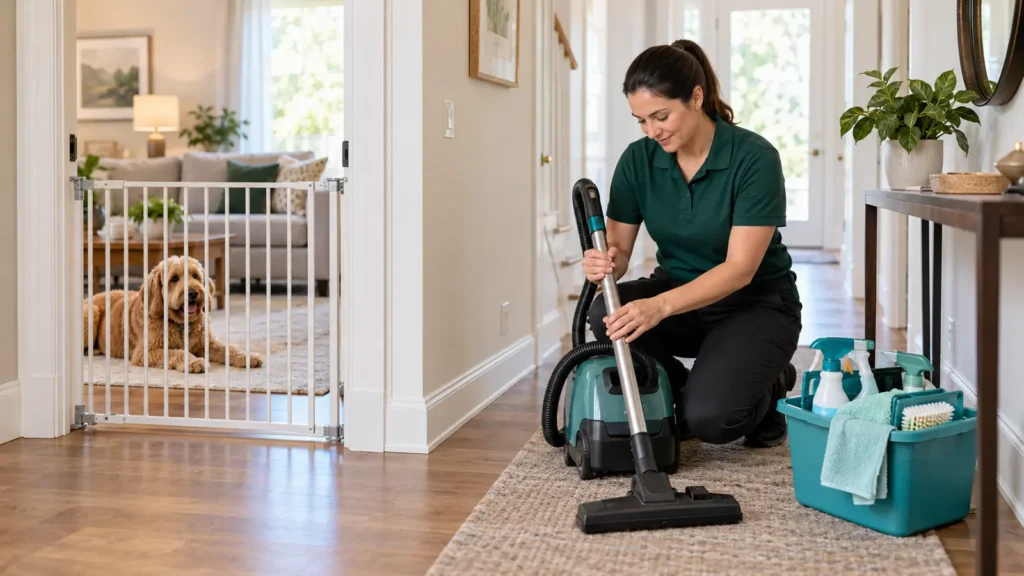
Choose a calm, secure arrangement that suits the animal: a closed room that is not being cleaned, a crate the pet already uses comfortably, another level of the home or time with a family member. Share any instruction needed to prevent an escape through an exterior door.
Keep pet bowls, toys, litter supplies and bedding away from the surfaces included in the cleaning, unless a related task was specifically discussed. Identify any area the cleaner should avoid.
Young children should also have a safe place away from wet floors, equipment and cleaning products. If the household will remain home, let the cleaner know where everyone plans to be so the work can be organized sensibly.
6. Arrange Entry, Parking and Building Access
Decide whether you will be home and confirm how the cleaner will enter. For a condo or apartment, check visitor parking, concierge procedures, elevator access and any building rules that could delay arrival.
Useful details include:
- The correct address and unit number
- Parking location or permit instructions
- Entry code, concierge or lockbox process
- Alarm instructions agreed with the company
- Elevator reservation or loading restrictions
- A phone number for appointment-day questions
- Any door that sticks, gate that locks or entrance that is easy to miss
If you are using a key, code or lockbox, confirm the exact process privately with the company. Do not post access information in a public note or social message.
Keep water and electricity connected and make sure the rooms have suitable lighting. Tell the cleaner in advance about renovations, a broken fixture or any utility interruption that could affect the work.
7. Identify Special Surfaces, Allergies and Off-Limits Areas
Every home has details that are not obvious at first glance. Tell the cleaner about natural stone, unfinished wood, delicate flooring, specialty coatings, antique furniture or a surface with manufacturer-specific care instructions.
Also disclose:
- Household allergies or scent sensitivities
- Product restrictions or preferences
- A damaged or loose surface that needs care
- A room, cupboard or drawer that is off-limits
- A home office containing confidential material
- A repair, pest concern or other condition affecting safe access
Specific instructions are more helpful than a general request to “be careful.” For example: “Please do not use product on the unsealed stone island,” or “The nursery is not included today.”
Professional cleaning is not a substitute for repair, pest control, mould remediation, hazardous-material handling or other specialized services. Describe unusual conditions before the appointment so the company can determine what is appropriate and within scope.
8. Choose Two or Three Priorities
If certain areas matter most, identify them before the visit. A short priority list helps the cleaner understand where you want the available appointment time focused.
Examples include:
- Extra attention to the main bathroom
- Pet hair in the living room
- Kitchen grease near the stovetop
- Guest room preparation
- Floors before an upcoming gathering
Separate priorities from extra tasks. Prioritizing the bathroom within an agreed whole-home checklist is different from adding an oven interior that was not quoted.
If every area is labelled urgent, the list does not guide the work. Choose the few outcomes that would make the biggest difference, then let the rest of the confirmed checklist follow.

Preparing for a First Cleaning vs. Recurring Visits
The first appointment usually requires more communication because the cleaner is learning the home. Once a routine is established, preparation can become much shorter.
| First appointment | Recurring appointment |
|---|---|
| Confirm the layout, access and current condition in detail | Report only changes to the usual access or household routine |
| Identify delicate surfaces and product restrictions | Keep permanent instructions on the agreed client record |
| Explain priorities and off-limits areas | Share a different priority before the visit when needed |
| Discuss pets, parking and alarms | Follow the same pet and entry routine unless it changes |
| Confirm the complete starting scope | Keep the regular checklist accessible by completing light tidying |
If your goal is ongoing help, review London Fresh Cleaning Co.’s recurring cleaning options. Weekly, biweekly and every-four-week schedules are subject to availability and the needs of the home. Our guide to choosing a house-cleaning frequency can help you compare those intervals.
What If You Will Not Be Home?
You do not necessarily need to be present, but the access and communication plan should be settled before the appointment.
Before leaving:
- Confirm the approved entry method.
- Disarm or explain the alarm procedure as agreed.
- Secure pets and off-limits rooms.
- Make sure the cleaner can reach the confirmed areas.
- Keep your phone available or provide an alternative contact.
- Explain how the home should be secured when the team leaves.
Avoid relying on a handwritten note for major changes. Send updates through the contact method used for the appointment so the company can confirm that they were received.
Common Preparation Mistakes to Avoid
Cleaning the Whole House First
Vacuuming and scrubbing before the visit defeats the purpose of hiring help. Put your effort into access, belongings and instructions.
Hiding Clutter in Areas That Need Cleaning
Moving everything into the tub, onto a bed or onto the kitchen island simply blocks a different surface. Use a storage basket or an excluded room instead.
Adding Unconfirmed Tasks at the Door
The team may have a schedule and equipment based on the agreed service. Request additional work before the appointment so its availability, time and pricing can be reviewed.
Forgetting About Parking or Condo Entry
A correct address is not always enough. Visitor parking, elevators, security desks and access codes can affect the start of the appointment.
Leaving Pets Without a Clear Plan
A pet moving between rooms can make cleaning and exterior-door access difficult. Arrange the pet’s space before the team arrives.
Leaving Unlabelled Products for the Cleaner
Do not provide a product in an unmarked bottle. Discuss product requests and keep every product in its original labelled container.
Frequently Asked Questions
How much should I tidy before a house cleaner arrives?
Pick up loose belongings from the floors and clear the requested counters, sinks and tables. You do not need to reorganize every cupboard or make the home look perfect. Focus on access to the surfaces included in the appointment.
Should I vacuum before a professional cleaner comes?
Usually, no. If vacuuming is part of your confirmed service, leave it for the cleaner. Use your preparation time to remove toys, cables, clothing and other objects from the floor.
Should I do the dishes before a cleaner arrives?
Clear the sink and counters where reasonably possible so those areas can be reached. Whether dishwashing or loading the dishwasher is included depends on the agreed service, so confirm instead of assuming.
Do I need to supply cleaning products or equipment?
Ask the company what it provides and whether it accepts client-supplied products. If you request a particular product, discuss it beforehand and leave it in its original labelled container with readable instructions.
Can I stay home during the cleaning appointment?
Yes, if that arrangement works for the confirmed service. Tell the cleaner which area you will use, keep walkways available and avoid rooms with wet floors or active equipment until the cleaner says they are ready.
What should I tell a cleaner about my pets?
Share the type and number of pets, where they will stay, and anything important about exterior doors or pet-sensitive rooms. Secure the animals according to the plan before the appointment begins.
Ready for Your Cleaning Appointment?
Preparing your home should take less effort than cleaning it. Clear the agreed areas, protect personal items, arrange access and pets, and communicate the details that are unique to your household.
To request house cleaning in London, Ontario, complete the free cleaning quote form with your property size, condition, priorities and preferred schedule. Submitting the form starts the review; your appointment is confirmed after the scope, price and schedule are agreed.
Have a question about an existing appointment or a special instruction? Contact London Fresh Cleaning Co. before the visit.